

Why Small Business Owners Should Make ADA Compliance a Priority
Your website may generate leads, book appointments, and drive sales. But when was the last time someone evaluated whether customers with disabilities could complete those same tasks?
For many small business owners, accessibility stays off the priority list until a complaint arrives. By then, website improvements may need to happen alongside attorney consultations, document requests, and legal deadlines.
Website accessibility guidelines belong in your website design and management strategy before that happens. Understanding how your website is evaluated, who handles improvements, and what remains unresolved can help you prepare for a risk that deserves attention.
Seyfarth Shaw identified 3,117 website accessibility lawsuits filed in federal court in 2025, a 27% increase over 2024 following two years of declines. The count excludes state court lawsuits and demand letters and covers businesses of all sizes. While it does not predict an individual business’s likelihood of being sued, it shows why accessibility deserves attention before a complaint arrives. For a small business, responding to a dispute can pull time and resources away from serving customers. Addressing known barriers now gives you more control over the timing, budget, and people involved in making improvements.
The takeaway for business owners is practical: website accessibility disputes are an active legal concern, and waiting for a complaint leaves less room to plan your response.
Understand Where ADA Compliance Fits Into Your Business Risk
The Americans with Disabilities Act, or ADA, prohibits disability discrimination. Under Title III, businesses classified as public accommodations must provide equal access to their goods and services. The Department of Justice says those obligations extend to what covered businesses offer online.
Small business owners should not assume that a small staff or limited revenue automatically provides an exemption. The ADA’s employment provisions and its public accommodation requirements are separate. How website requirements apply can also depend on the jurisdiction and business model, including whether a business operates solely online.
Website accessibility guidelines, particularly the Web Content Accessibility Guidelines, or WCAG, provide a technical framework for evaluating accessibility. ADA compliance means meeting the legal obligations that apply to your business; a WCAG evaluation can inform that assessment but does not replace it.
For a closer look at accessibility features and common website barriers, read our website accessibility overview. With that foundation in place, ask your website provider what has been evaluated on your site and what still needs attention.
Ask Your Website Provider for Specific Answers
A website launch, redesign, or software subscription does not tell you what accessibility work has actually been completed. A statement that your website is “ADA compliant” should lead to a more detailed conversation.
Ask your website provider:
- What was evaluated? Request the review date, pages and customer processes tested, and the website accessibility guidelines used.
- How was the evaluation performed? Find out whether testing included human review alongside automated tools.
- What remains unresolved? Ask for identified barriers, recommended improvements, and any assessment limitations.
- Who handles third-party tools? Clarify who is responsible for appointment schedulers, payment systems, registration forms, and other outside services.
- What happens after updates? Establish how you will review new content, software changes, and replacement tools.
Automated tools can support accessibility work, but they cannot confirm that every part of a website is accessible. DOJ recommends pairing automated checks with manual review and cautions that a clean automated report does not necessarily establish accessibility.
Clear answers help you budget for improvements, prioritize unresolved barriers, and determine whether you need additional accessibility expertise. The next step is deciding who will keep that work moving.
Build a Response Plan Before You Need One
Accessibility work can lose momentum when responsibility is unclear. A developer may be waiting for approval, a marketing team may assume a software provider handles everything, and the owner may believe the issue has already been resolved.
Choose someone within your business to coordinate the work. That person should know where review findings are stored, who approves improvements, and how completed changes will be verified. Keep records of evaluations, reported issues, decisions, and completed work. These records help your team distinguish between problems that have been addressed and those still awaiting action.
Documentation alone does not establish ADA compliance or prevent a lawsuit. It does help your team track decisions, verify completed work, and identify outstanding issues.
Customer feedback also needs a clear response process. If someone reports difficulty using your website, your team should know who will acknowledge the concern, investigate it, and coordinate improvements.
If a demand letter or lawsuit arrives, promptly contact an attorney experienced in ADA website matters. Preserve the correspondence and relevant website records, and coordinate proposed website changes with counsel. A technical repair and a legal response may need to proceed together.
Your Free Guide to ADA Website Accessibility
Not sure how your website measures up? Our free, easy-to-read guide covers the basics of ADA accessibility, from what the law expects to the everyday fixes that make the biggest difference. It also includes a simple checklist you can use to review your own site in just a few minutes. Inside, you’ll find:
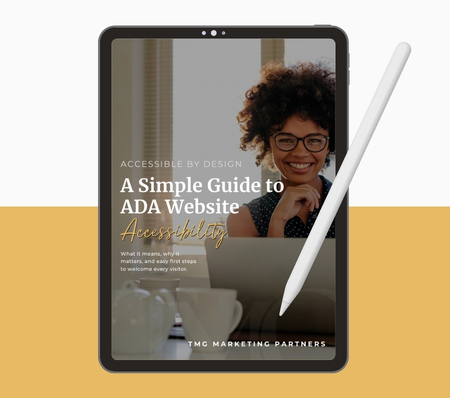
- The four principles of an accessible site
- How accessibility protects your business and helps you reach more customers
- What ADA website accessibility means and why most experts point to WCAG 2.1 Level AA
- Simple habits that keep your site accessible as you add new pages, photos, and videos
- A quick ADA website checklist covering images, readability, navigation, and forms
You do not need to wait for a dispute to take action. Reviewing responsibilities, gathering existing findings, and setting priorities now gives your business time to make informed decisions. Use website accessibility guidelines to guide improvements, and establish a process to review your site as it changes.
At TMG Marketing Partners, we help business owners connect website decisions with their broader marketing goals. If you are unsure what has been evaluated or who manages accessibility updates, let’s discuss your website and identify the next steps worth prioritizing.